
How Can You Tell If Your Home Has Hidden Mold? Signs You Should Never Ignore
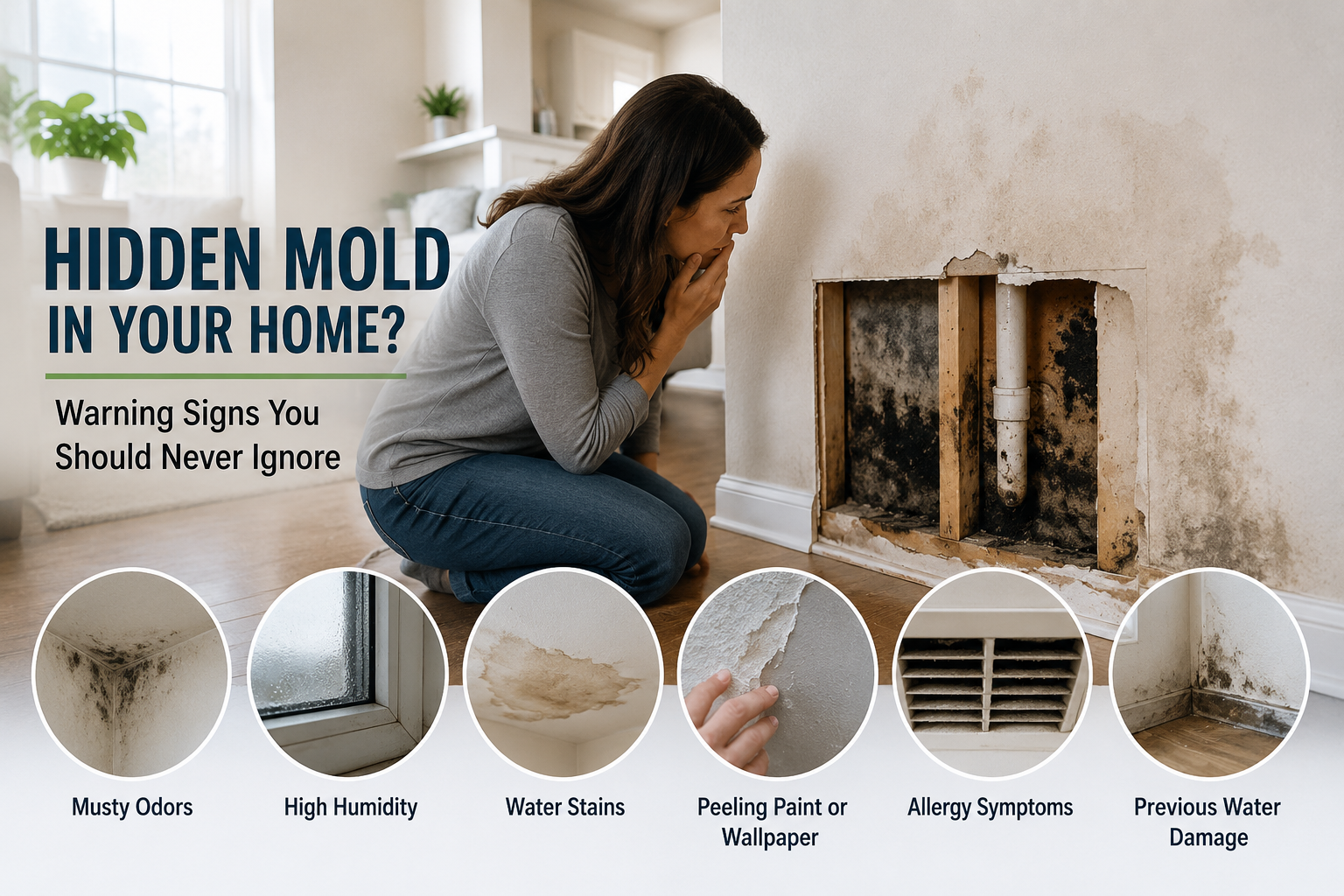
Why Hidden Mold Is a Serious Problem
Have you noticed a musty smell in your home or started experiencing unexplained allergies? These could be signs of hidden mold. Mold doesn’t always grow in places you can see. It often hides behind walls, under flooring, inside ceilings, or around plumbing leaks, quietly damaging your property and affecting your indoor air quality.
Knowing the warning signs of hidden mold can help you act early, protect your family’s health, and avoid expensive repairs.
What Causes Hidden Mold?
Mold grows wherever there is excess moisture. Common causes include:
- Water leaks from pipes or appliances
- Roof leaks
- Flooding or water damage
- High indoor humidity
- Poor ventilation in bathrooms, kitchens, and laundry rooms
- Condensation around windows and HVAC systems
Because mold only needs moisture and organic material to grow, it can spread quickly if the problem isn’t addressed.
7 Signs Your Home May Have Hidden Mold
1. A Persistent Musty Odor
One of the earliest signs of hidden mold is a damp, earthy smell. Even if you can’t see mold, the odor often indicates it’s growing behind walls, beneath flooring, or inside air ducts.
2. Allergy Symptoms That Get Worse Indoors
Hidden mold releases tiny spores into the air. These spores may trigger:
- Sneezing
- Coughing
- Runny nose
- Itchy eyes
- Skin irritation
- Headaches
If symptoms improve when you leave your home, mold could be affecting your indoor air quality.
3. Water Stains or Discolored Walls
Brown stains, peeling paint, bubbling drywall, or warped flooring usually indicate moisture behind the surface. Where moisture exists, mold often follows.
Never ignore water stains, even if they appear dry.
4. Warped Floors or Soft Drywall
Moisture trapped inside building materials weakens them over time.
Signs include:
- Soft walls
- Buckling hardwood floors
- Loose tiles
- Sagging ceilings
These problems may point to hidden water damage and mold growth.
5. Visible Mold in Small Areas
If you notice mold on a wall or ceiling, there may be much more growing behind the surface.
Cleaning visible mold doesn’t always solve the problem because the moisture source remains.
6. Previous Water Damage
Has your home experienced:
- Flooding?
- A burst pipe?
- Roof leaks?
- Overflowing appliances?
Even if everything appears dry today, moisture may still be trapped inside walls or insulation, allowing mold to grow months later.
7. Increased Humidity Inside Your Home
Rooms that constantly feel damp or have excessive condensation may create the perfect environment for mold growth.
Using proper ventilation and repairing moisture problems quickly helps prevent mold from spreading.
Why Hidden Mold Is a Serious Problem
Hidden mold affects more than your home’s appearance.
It can:
- Damage drywall, wood, insulation, and flooring
- Reduce your property’s value
- Cause unpleasant odors
- Lower indoor air quality
- Trigger allergies and respiratory irritation
- Lead to costly structural repairs if ignored
The longer mold remains untreated, the farther it spreads.
Can You Remove Hidden Mold Yourself?
Small amounts of surface mold may be cleaned safely in some situations. However, hidden mold behind walls, ceilings, or flooring should be handled by professionals.
DIY cleaning often removes only what is visible while leaving mold spores and moisture behind. Disturbing mold without proper containment can also spread spores to other areas of your home.
Professional mold remediation addresses both the mold and the source of moisture to help prevent it from returning.
How Professional Mold Remediation Works
A professional mold remediation company follows a proven process:
- Inspect the property to locate hidden mold and moisture.
- Identify and repair the source of water intrusion.
- Contain affected areas to prevent spores from spreading.
- Remove damaged materials when necessary.
- Clean and disinfect affected surfaces using specialized equipment.
- Dry the area completely with commercial-grade drying equipment.
- Improve indoor air quality using HEPA filtration and air scrubbers.
- Perform final inspections to ensure the area is clean and safe.
This thorough approach helps restore a healthier indoor environment.
How to Prevent Mold in Your Home
You can reduce the risk of mold by:
- Fixing leaks immediately
- Keeping indoor humidity below 50%
- Using exhaust fans in bathrooms and kitchens
- Cleaning gutters regularly
- Drying wet materials within 24–48 hours
- Scheduling inspections after flooding or water damage
Prevention is always less expensive than major mold remediation.
Frequently Asked Questions
How do I know if mold is behind my walls?
A musty odor, water stains, peeling paint, soft drywall, or worsening allergy symptoms may indicate mold hidden behind walls. A professional inspection can confirm its presence.
Is hidden mold dangerous?
Hidden mold can affect indoor air quality and may cause allergy symptoms or respiratory irritation, especially for people with asthma, allergies, or weakened immune systems.
Can mold return after removal?
Yes. Mold can return if the moisture problem isn’t fixed. Professional mold remediation removes mold while addressing the source of the moisture.
When should I call a mold remediation company?
Call a professional if you notice persistent mold odors, recurring mold growth, signs of water damage, or suspect mold in areas you can’t access safely.
Protect Your Home Before Mold Gets Worse
Hidden mold doesn’t disappear on its own. The sooner it’s identified and removed, the easier it is to protect your property and avoid costly repairs. If you’ve noticed musty odors, water damage, or unexplained allergy symptoms, professional mold remediation can help restore a clean, healthy, and safe environment for your family or business.