
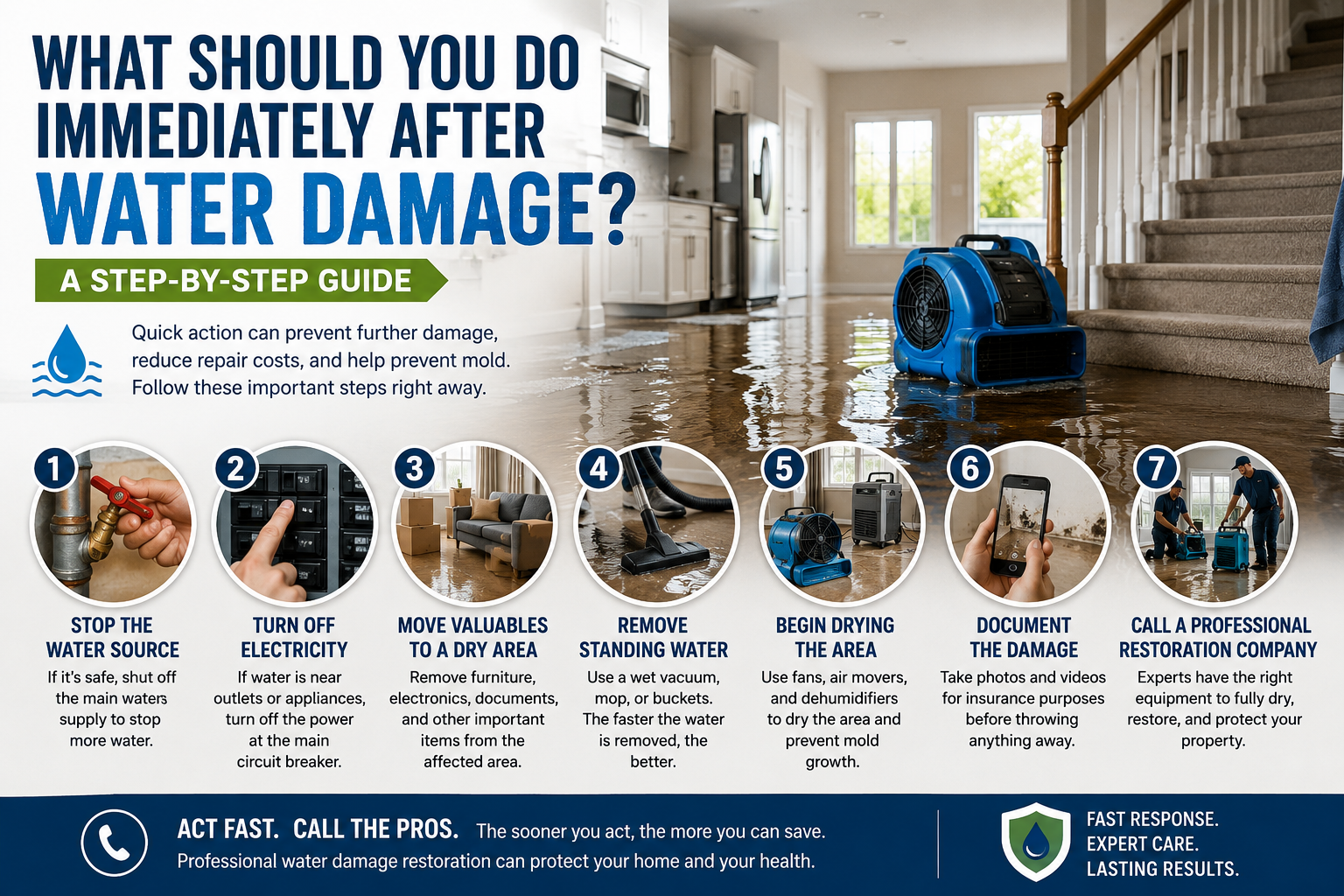
What Should You Do Immediately After Water Damage? A Step-by-Step Guide
When does water damage occurs?
Water damage can happen when you least expect it. A burst pipe, leaking roof, overflowing appliance, or heavy rain can quickly flood your home or business. The first few hours after water damage are critical. Acting fast can reduce repair costs, prevent mold growth, and protect your property.
If you’re wondering what to do after water damage, follow these important steps.
Step 1: Stop the Water Source (If It’s Safe)
Before anything else, try to stop the source of the water if you can do so safely.
Common water sources include:
- Burst or leaking pipes
- Overflowing sinks or toilets
- Washing machine or dishwasher leaks
- Roof leaks during storms
If you’re unable to stop the water, contact a plumber or emergency restoration company immediately.
Safety always comes first. Never enter flooded areas if you suspect electrical hazards.
Step 2: Turn Off Electricity
Water and electricity are a dangerous combination.
If water is near electrical outlets, appliances, or your breaker panel, turn off the power from the main electrical panel—but only if it is safe to reach.
If you’re unsure, leave the area and call your utility company or an emergency restoration professional.
Step 3: Move Valuables to a Dry Area
Protect important belongings before they become permanently damaged.
Move items such as:
- Electronics
- Important documents
- Family photos
- Furniture
- Rugs
- Clothing
If possible, place aluminum foil or wooden blocks under furniture legs to reduce further water damage.
Step 4: Remove Standing Water
Standing water can quickly soak into floors, drywall, and furniture.
Use a wet vacuum, mop, towels, or buckets if the flooding is minor and safe to handle.
For larger floods, professional water extraction equipment is much more effective and helps prevent long-term damage.
The faster the water is removed, the better.
Step 5: Begin Drying the Area
Even after standing water is gone, moisture remains inside walls, flooring, insulation, and furniture.
Open windows if weather permits.
Use:
- Fans
- Dehumidifiers
- Air movers
Professional restoration companies use commercial drying equipment that removes hidden moisture much faster than household fans.
Step 6: Document the Damage
Before throwing anything away, take photos and videos of the damage.
Capture:
- Floors
- Walls
- Furniture
- Electronics
- Personal belongings
- Water source
These records can help support your insurance claim.
Keep receipts for emergency expenses whenever possible.
Why You Shouldn’t Wait
Many homeowners think they’ll clean everything up later.
Unfortunately, water damage gets worse every hour.
Delaying cleanup may lead to:
- Mold growth within 24 to 48 hours
- Warped flooring
- Damaged drywall
- Structural weakening
- Electrical hazards
- Unpleasant odors
- Higher repair costs
Quick action saves both time and money.
How to Prevent Mold After Flooding
One of the biggest concerns after water damage is mold.
You can reduce the risk by:
- Removing standing water immediately.
- Drying affected areas completely.
- Running dehumidifiers.
- Discarding water-damaged materials that cannot be dried.
- Repairing the source of the leak.
- Scheduling professional water damage restoration if moisture remains hidden.
Remember, mold often grows behind walls and under flooring where it cannot be seen.
When Should You Call a Professional Water Damage Restoration Company?
You should contact a professional if:
- Water has affected multiple rooms.
- Floodwater may be contaminated.
- Water has soaked walls or ceilings.
- Flooring feels soft or warped.
- You notice mold or musty odors.
- Water has been standing for more than a few hours.
- The damage involves electrical systems.
- You’re unsure how extensive the damage is.
Professional restoration technicians use moisture meters, thermal imaging, commercial water extractors, industrial dehumidifiers, and air movers to fully dry your property and prevent future problems.
Frequently Asked Questions
How quickly should water damage be cleaned up?
Immediately. Water should be removed as soon as possible to reduce damage and help prevent mold growth, which can begin within 24 to 48 hours.
Can I clean up water damage myself?
Small spills or minor leaks may be manageable. However, significant flooding or water trapped behind walls and under floors should be handled by professionals to ensure complete drying.
Will water damage cause mold?
Yes. If moisture remains, mold can begin growing within one to two days. Fast drying and proper restoration greatly reduce the risk.
Does homeowners insurance cover water damage?
Coverage depends on the cause of the damage and your insurance policy. Sudden and accidental water damage is often covered, while gradual leaks or flood damage may require separate coverage.
What equipment do restoration professionals use?
Water damage restoration companies use commercial pumps, water extractors, industrial dehumidifiers, air movers, moisture meters, and thermal imaging equipment to remove water and dry hidden moisture effectively.
Restore Your Property Before Damage Gets Worse
Water damage doesn’t fix itself. The longer moisture remains, the greater the risk of mold, structural damage, and expensive repairs. Whether you’re dealing with a small leak or a major flood, professional water damage cleanup and restoration can help protect your home or business. Fast response, advanced drying equipment, and experienced restoration technicians ensure your property is restored safely, thoroughly, and as quickly as possible.